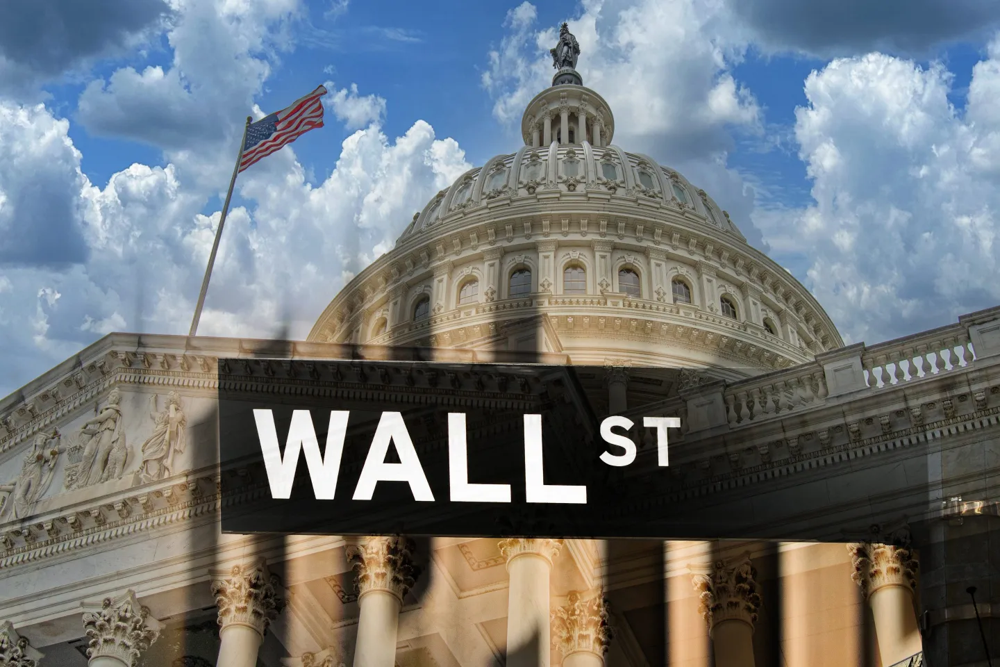
Congressional Stock Trading Performance by Political Party
Congressional Stock Trading Performance by Political Party has become one of the most closely watched alternative market indicators in the U.S. Over the past four years, lawmakers from both parties have disclosed thousands of stock trades, frequently outperforming the broader market. Using publicly reported filings compiled by Capitol Trades and Unusual Whales, this analysis breaks down how Democrats and Republicans traded from 2022 through 2025, what sectors drove performance, and which members generated the strongest returns.
For real-time disclosure tracking, see LambdaFin’s full Congressional Trading Dashboard
Congressional Stock Trading Performance by Political Party: Average Returns vs S&P 500
To compare performance, we look at party-level average returns relative to the S&P 500. For 2022–2024, consistent estimates show Democrats outperforming Republicans. Available 2025 estimates suggest a reversal of this pattern, with Republicans slightly outpacing Democrats and both parties roughly in line with the S&P benchmark.
| Year | Democrats (Avg. Return) | Republicans (Avg. Return) | S&P 500 Return |
|---|---|---|---|
| 2022 | ~-1.8% | +0.4% | –18.1% |
| 2023 | ~+31% | ~+26% | ~+26.3% |
| 2024 | ~+31.1% | ~+26.1% | ~+23.3% |
| 2025* | ~+14.4%* | ~+17.3%* | ~+16.8%* |
- Democrats led 2022-2024: Democratic members averaged +31% in both 2023 and 2024, outpacing Republicans by ~5 percentage points during bull market conditions.
- 2025 reversal: Preliminary data shows Republicans achieving 17.3% vs. Democrats’ 14.4%, marking the first year Republicans outperformed since tracking began.
- Both beat retail investors: Congressional returns consistently exceed the estimated 8-12% average retail investor performance, suggesting informational or strategic advantages.
Insight: 2025 saw a narrower spread of returns. Republicans edged ahead based on early data, while both parties roughly matched the S&P 500’s performance. This contrasts with Democrats’ consistent leads in 2023–2024.
Trades and Volume by Party (2022–2025)
Overall trading activity has been robust, with thousands of trades by ~100+ members annually. Data from Capitol Trades shows a decline in total trades and volume in 2025 through mid-year compared with prior years.
| Year | Total Trades | Volume (Million Shares/Assets) | Members Reporting | Key Trend |
|---|---|---|---|---|
| 2022 | 14,752 | 610.8 | 154 | High post-pandemic activity |
| 2023 | 11,491 | 751.2 | 118 | Strong tech positions |
| 2024 | 9,261 | 706.4 | 113 | Lower but still active |
| 2025* | 7,810 | 362.5 | 108 | Downtrend through July 2025 |
Insight: While participation fell, Congress still executed thousands of trades annually, keeping Congressional Stock Trading Performance by Political Party highly relevant for market observers.
Most Active Congressional Stock Traders by Trade Volume
A core metric used to evaluate Congressional Stock Trading Performance by Political Party is total trading activity. Measured by reported transaction counts and estimated dollar volume, a small group of lawmakers account for a disproportionate share of congressional stock trading.
The table below highlights the most active congressional stock traders based on publicly disclosed transaction filings:
| Member | Party | Total Trades | Est. Volume |
|---|---|---|---|
| Josh Gottheimer | D | 3,284 | ~$272M |
| Suzan DelBene | D | 147 | ~$170M |
| Nancy Pelosi | D | 162 | ~$160M |
| Mark E. Green | R | 614 | ~$95M |
| Tommy Tuberville | R | 1,121 | ~$34M |
| Michael McCaul | R | 552 | ~$33M |
Democratic members dominate total dollar volume, led by Josh Gottheimer with the highest reported trade count in Congress.
Most Traded Stocks by Party (2024-2025)
| Stock | Democrats (# Trades) | Republicans (# Trades) | Net Partisan Tilt |
| NVIDIA (NVDA) | 312 | 156 | Democrat +156 |
| Apple (AAPL) | 287 | 198 | Democrat +89 |
| Microsoft (MSFT) | 265 | 174 | Democrat +91 |
| Tesla (TSLA) | 89 | 143 | Republican +54 |
| Exxon Mobil (XOM) | 34 | 127 | Republican +93 |
ETF Proxy Performance (2025 Context)
ETFs that mimic congressional trading provide another lens. For example, as of mid-2025, Democratic-tilted ETF strategies outpaced Republican ones on a cumulative basis since 2023, although returns vary widely by methodology.
| ETF | Party Tilt | YTD/Since Inception Returns |
|---|---|---|
| NANC | Democratic | ~+58.9% cumulative (to May ‘25) |
| GOP | Republican | ~+30.2% cumulative (to May ‘25) |
Summary: Partisan Patterns in Stock Trading Returns
- 2022–2024: Democrats generally outperformed Republicans and the S&P 500, driven partly by tech-heavy portfolios.
- 2025: Early data suggest Republicans averaged slightly higher returns than Democrats, with both roughly aligned with the market, pointing to changing portfolio strategies.
- Sector tilts and individual stock activity illustrate stylistic differences in approaches between parties.
This comprehensive analysis of Congressional stock trading performance represents months of research aggregating data from Capitol Trades, Unusual Whales, and SEC filings. If you’d like to request a PDF copy of this report with additional trade-level data, historical charts, and expanded member analysis, or learn more about how LambdaFin tracks Congressional trading in real-time, you can reach out here or explore our Congressional Trading Dashboard.